The history of vaccines
The World Health Organization (WHO) plots the timeline from Edward Jenner and the creation of the first vaccine (smallpox) in 1796 through to 2020 and the Covid vaccination programme.
A detailed history is also offered here.
1796 - the smallpox vaccine
The WHO details how, in May 1796, English physician Dr Edward Jenner inoculated 8-year-old James Phipps ‘with matter collected from a cowpox sore on the hand of a milkmaid. Despite suffering a local reaction and feeling unwell for several days, Phipps made a full recovery.’
Two months later, in July 1796, Jenner inoculated Phipps ‘with matter from a human smallpox sore in order to test Phipps’ resistance. Phipps remains in perfect health.’
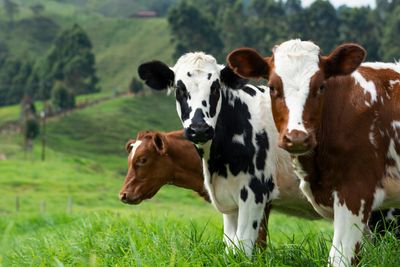
It seemed that the cowpox inoculation had protected him against smallpox, and this was the basis for the new 'vaccine' (the name comes from the Latin word for cow, ‘vacca’).
The 1800s
In the late 1880s, Louis Pasteur developed the first laboratory-produced vaccines for cholera and rabies – but these were largely untested on humans and deemed too risky for general use.
The 1900s
The Spanish flu pandemic in 1918 to 1919 led to a great rush (indeed, it was termed a military priority) to produce a flu vaccine.
Although 2 million doses were tested, results were very inconclusive.
Subsequent studies have shown that the vast majority of death occurred through pneumonia as a secondary infection, possibly caused by the wearing of masks. The race to develop vaccines for viruses continued, however.
It was almost another 30 years before a flu vaccine was approved – initially only for military use.
From the 1930s onwards, various vaccines were developed and deployed including yellow fever, polio, pertussis (whooping cough), diphtheria and tetanus.
Mass vaccination
From the late 1960s onwards, the WHO intensified its work to eradicate diseases through vaccination – beginning with smallpox.
Many more vaccines have since been developed, including hepatitis B, MMR (which combined measles, mumps and rubella vaccines), rotavirus, haemophilus influenzae (Hib), meningitis, Ebola and malaria.
The first HPV (human papillomavirus) vaccine, intended to prevent cervical cancer, was approved in 2006.
The latest vaccine

On 30 January, 2020, the WHO Director General declared the outbreak of a novel coronavirus 2019 (SARS-CoV-2) to be a Public Health Emergency of International Concern. On 11 March, the WHO confirmed that Covid-19 was a pandemic.
Covid-19 vaccines were developed, produced and distributed with unprecedented speed, some using new mRNA technology.
In December 2020, just one year after the first case of Covid-19 was officially detected, the first Covid-19 vaccine doses were administered.
Millions of people worldwide have now received this injection – some of them, multiple times.
Our first campaign, Safer to Wait, focused on the Covid-19 vaccines and children. Find out more here.